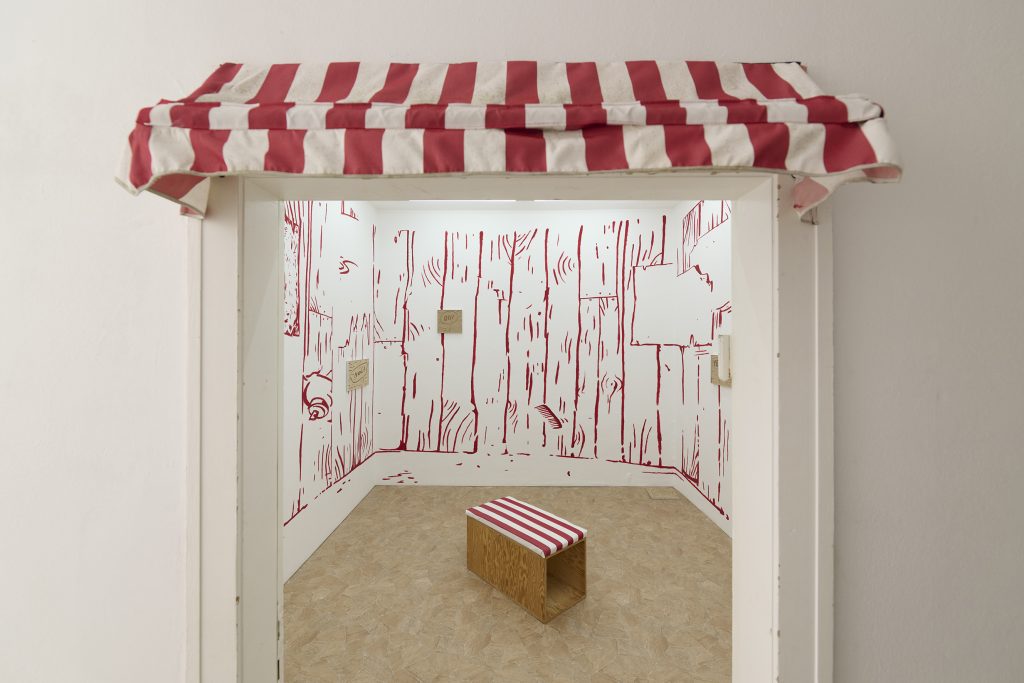
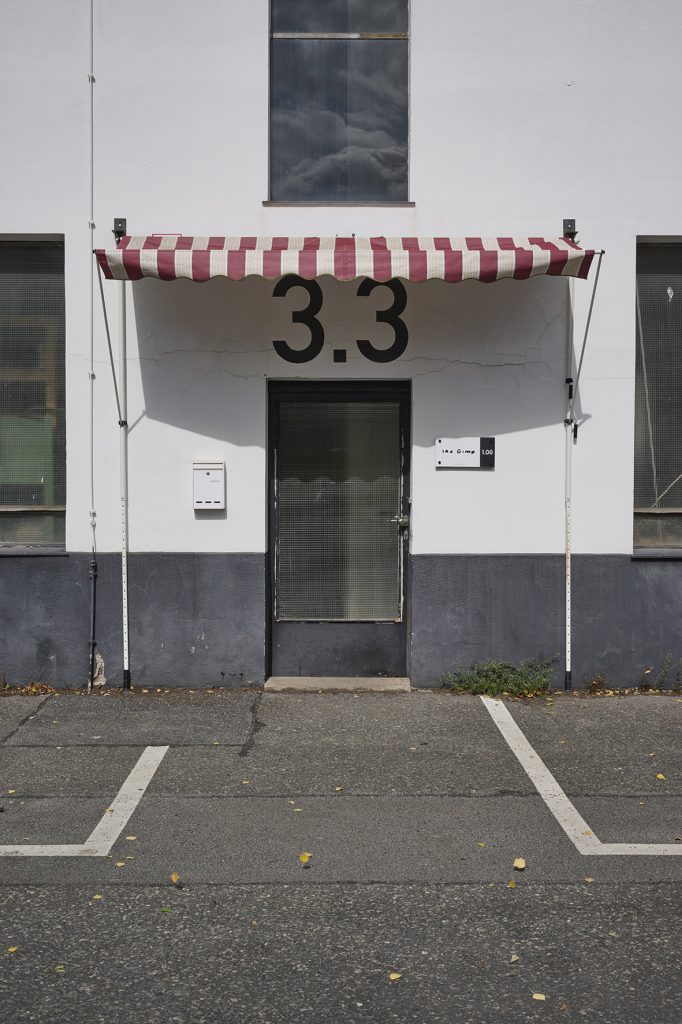
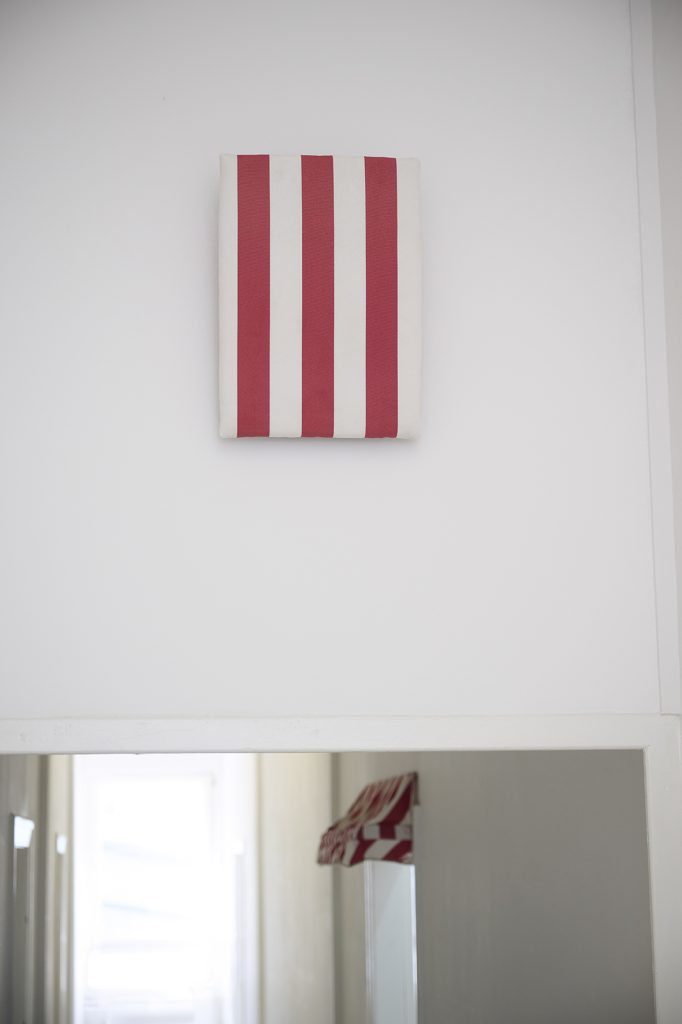
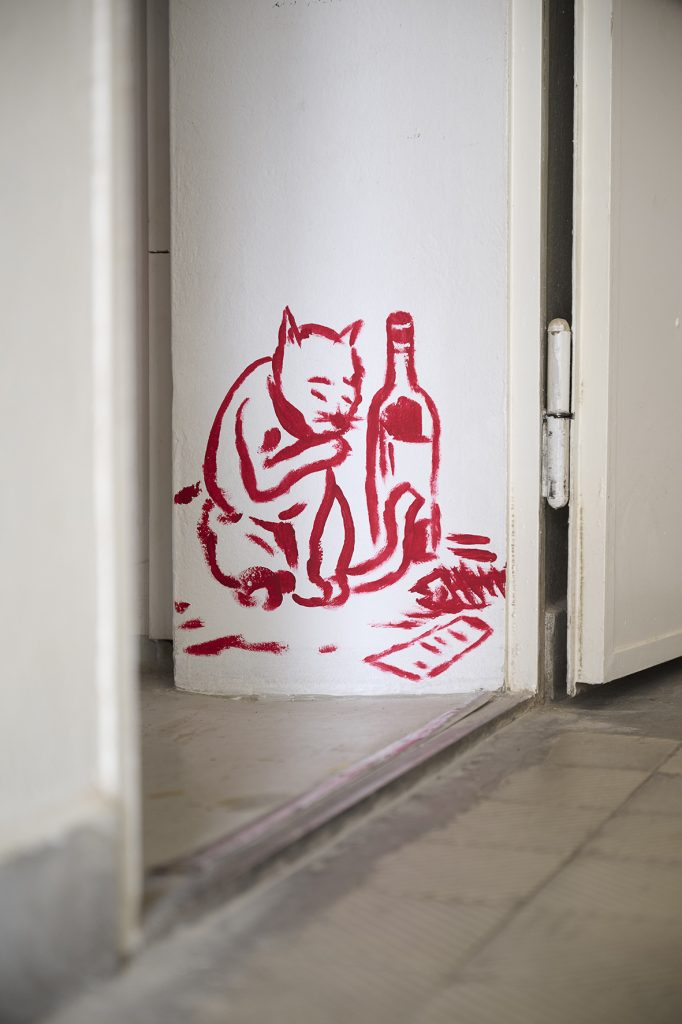
This time, it’s really easy to find “the Gimp” project space: in the courtyard of the business park, a red-and-white-striped awning at the entrance shines invitingly even from a distance. In the stairwell, a cozy stool with the same stripes and—right next to the fire extinguisher—a cat painted in red on the wall, holding a bottle of wine, await visitors.
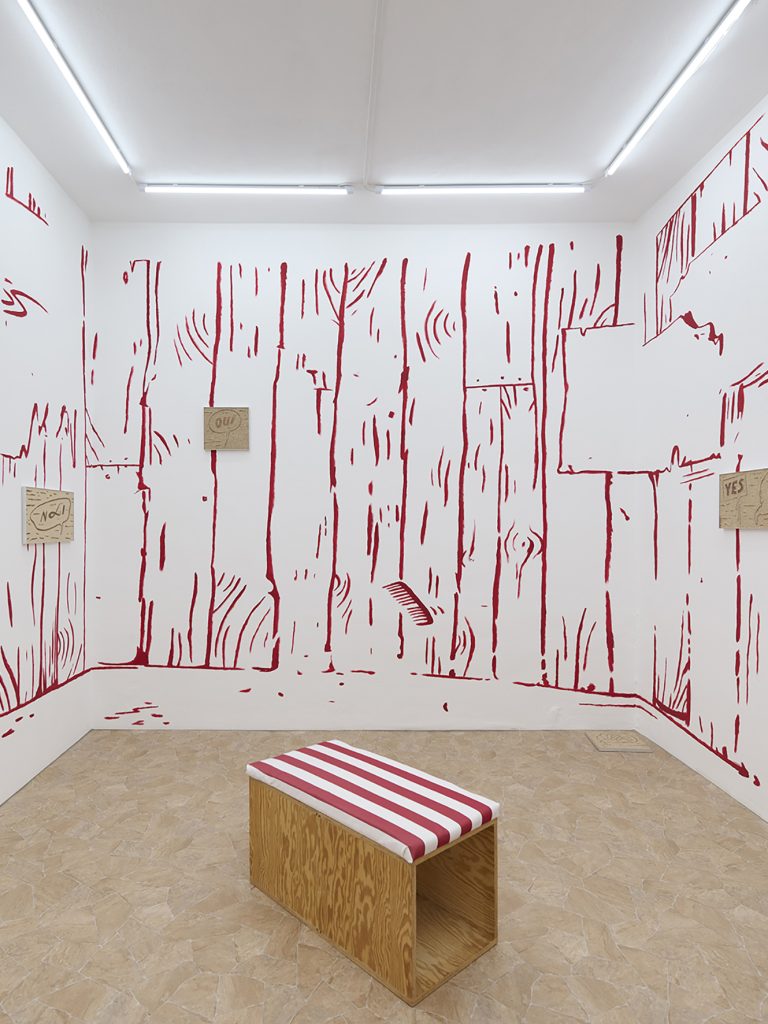
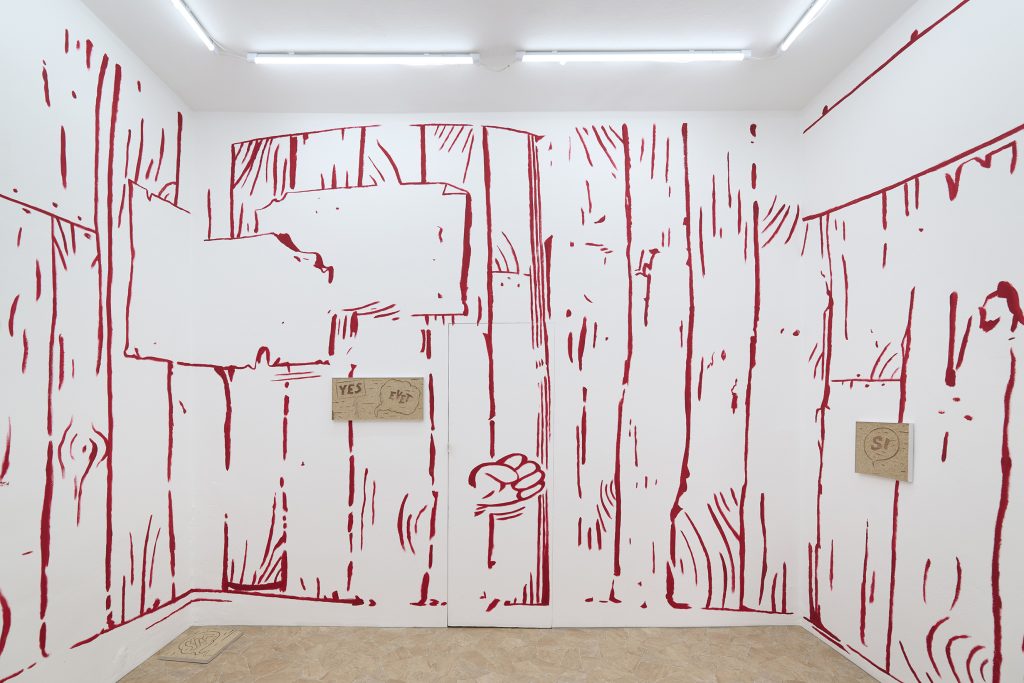
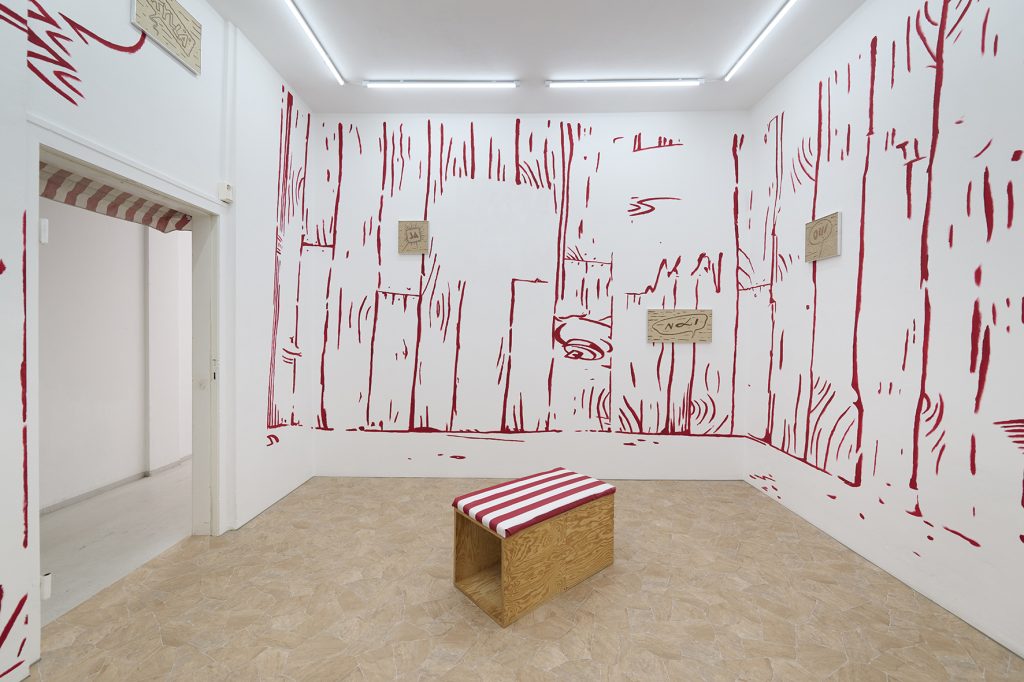
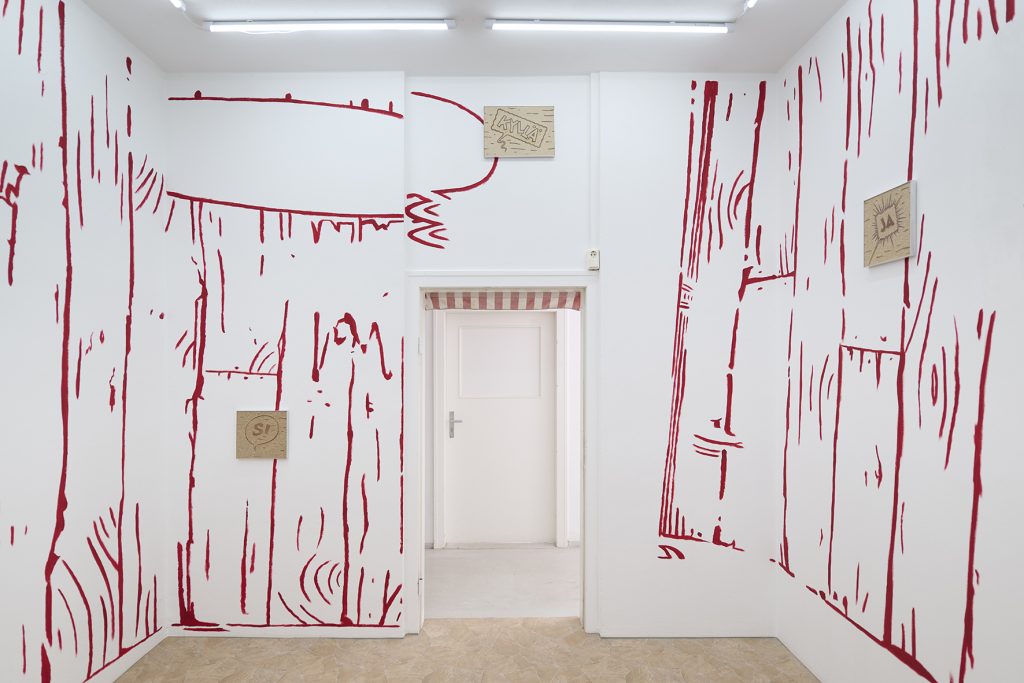
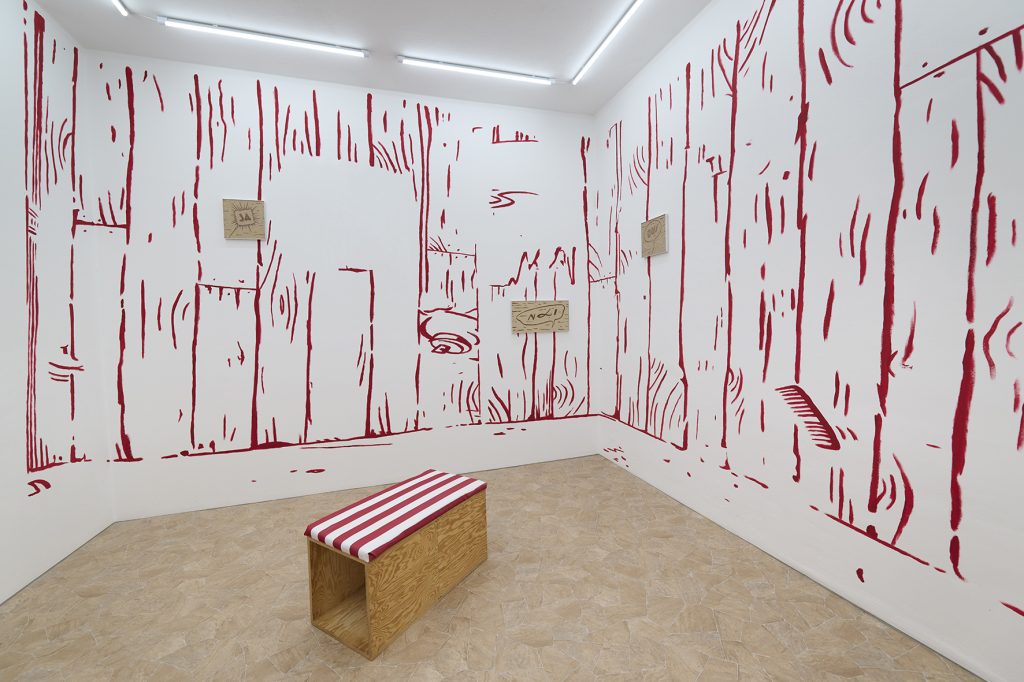
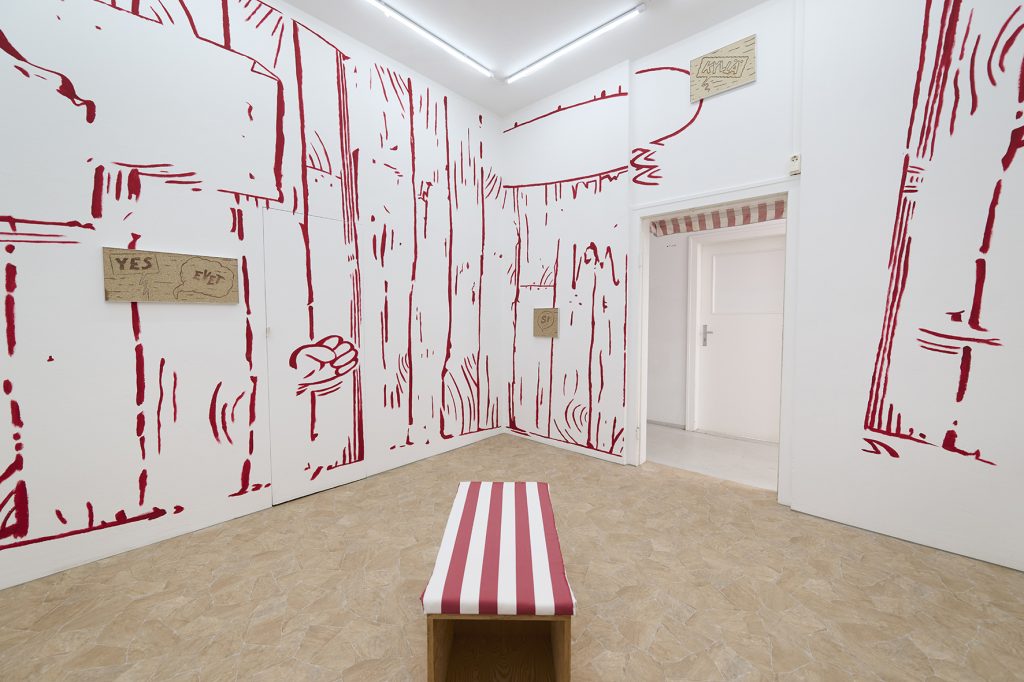
For his exhibition, Friedrich Herz has created a decidedly friendly atmosphere: the walls of the project space are painted all around—also in red—with a picket-fence motif from a Lucky Luke comic book, slightly abstracted and featuring only a few clues hinting at its origins: a clenched fist, a comb, a spray can, pinned-up posters… It is up to the visitors to craft their own story from these elements—or rather, to engage with the symbols themselves.
The image actually comes from the back cover of the Rocky Luke comic anthology “Banlieue West”, a parody volume from 1988, for which various artists each drew a one-page spread featuring a rockabilly version of the infamous comic hero.
L’homme qui se tire plus vite que son ombre—the little word “se” transforms the famous slogan of “the man who shoots faster than his shadow” into “the man who flees faster than his shadow”…
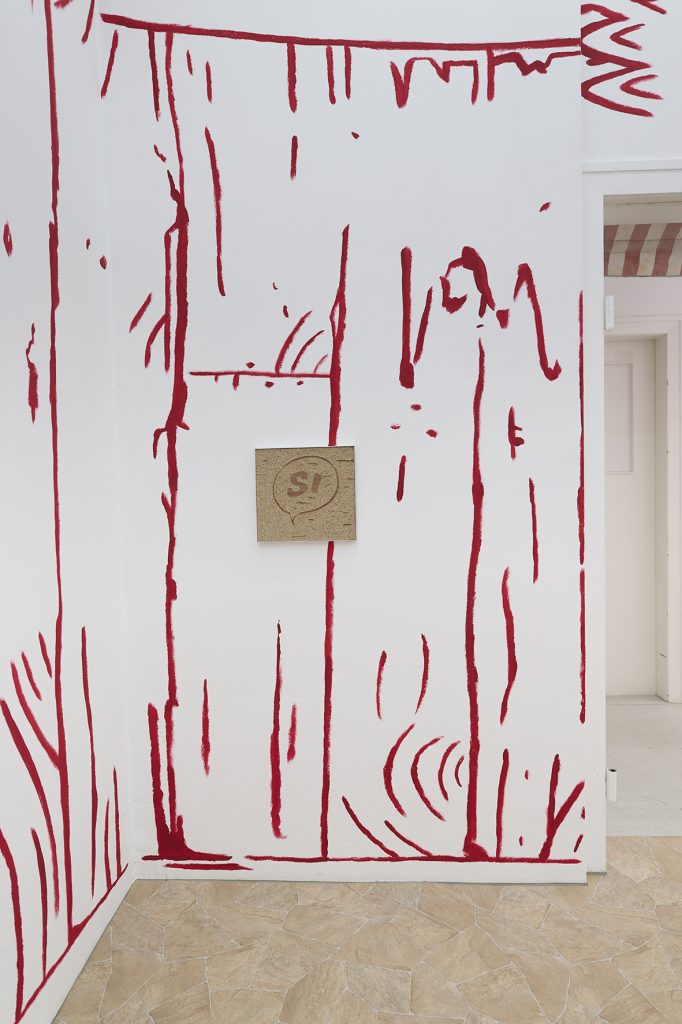
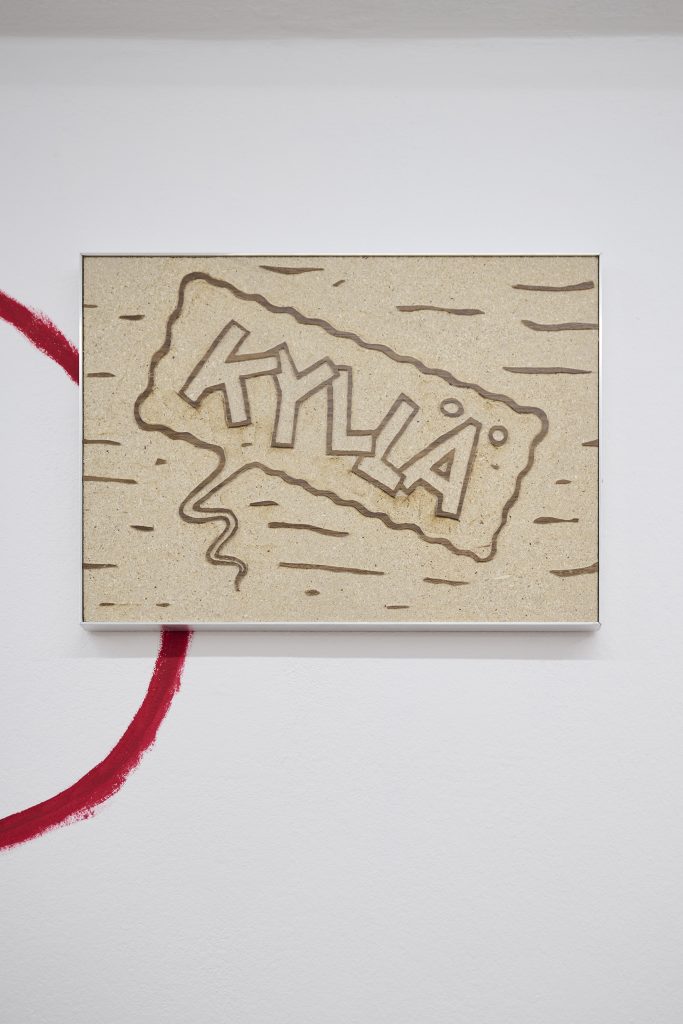
The speech bubbles carved on the particleboard panels—coated with faux wood, framed in aluminium and mounted on the walls—call out an affirmative “Yes” to us in various languages: Ja! Oui! Yes!
An IBM advertisement in a glossy magazine from the 1990s served as the source of inspiration for these new reliefs, which Herz created for the first time not by hand but with a router. Evidently, the company was attempting at the time, through its advertising campaign, to express the international enthusiasm for new technologies. Taken out of their original context, however, these yes-men could have chosen just about anything: a career, a person, a political statement?
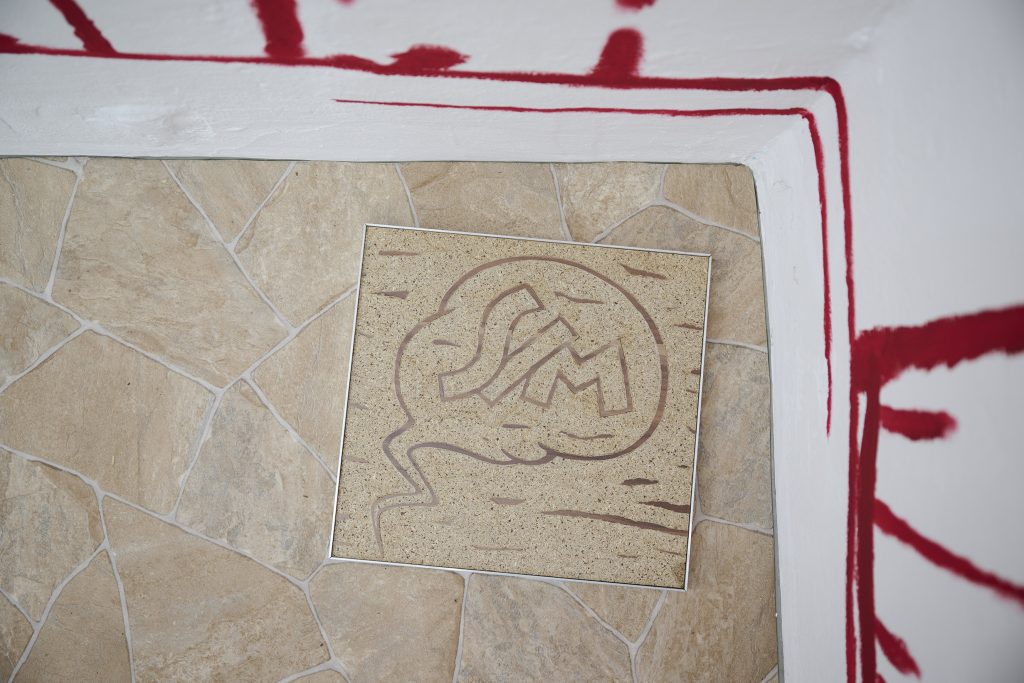
The floor is covered with PVC in a “crazy paving” pattern, which further emphasizes the illusion of a 1960s ice cream parlor already suggested by the awnings. Another carved relief, bearing the Portuguese lettering “Sim”, is camouflaged in a corner of the faux stone slab floor, while the door to the adjacent room almost disappears into the painting.
This interplay of repeatedly referenced surfaces in various media and materials is familiar from many of Friedrich Herz’s earlier works—for example, he has mimicked the randomly formed shapes of poster paste residue by carving them into tabletops.
In this exhibition, however, he takes it to the extreme—and as you look at it and reflect on it, a slight dizziness sets in… you find yourself, so to speak, in a virtual world created entirely through analog means.
And as you walk out, you’re quite ready to have a glass of red wine with the cat. Ναι!