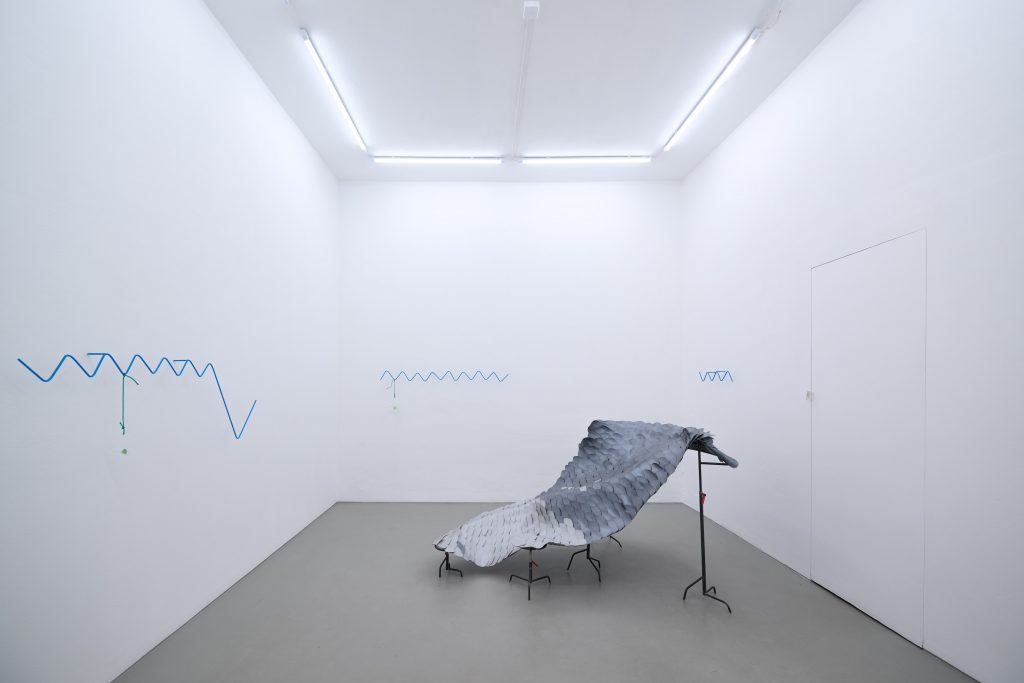
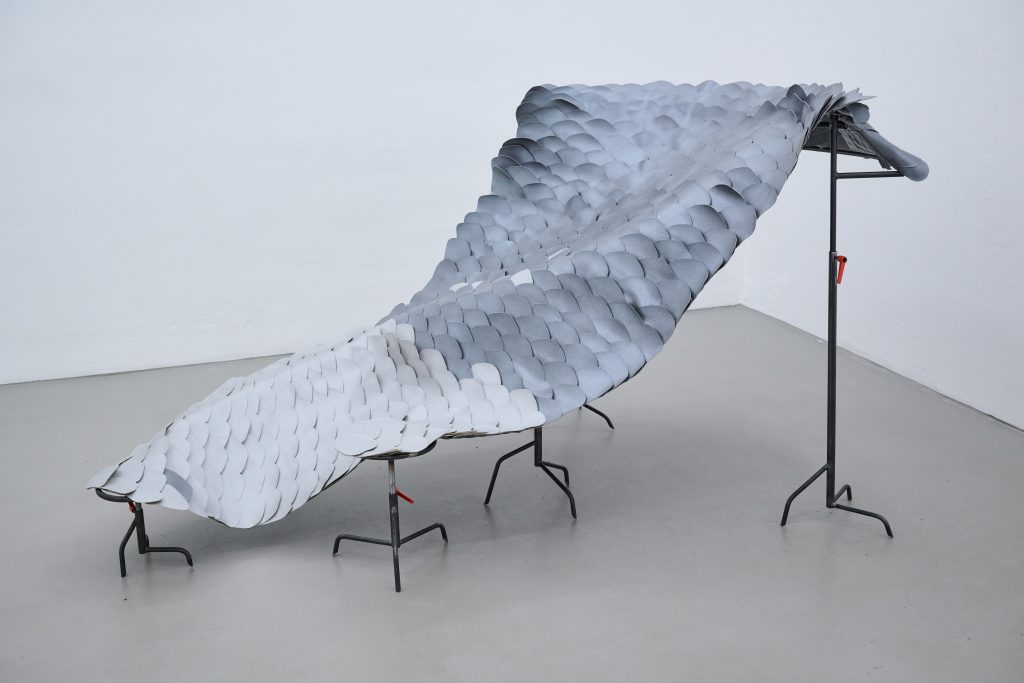
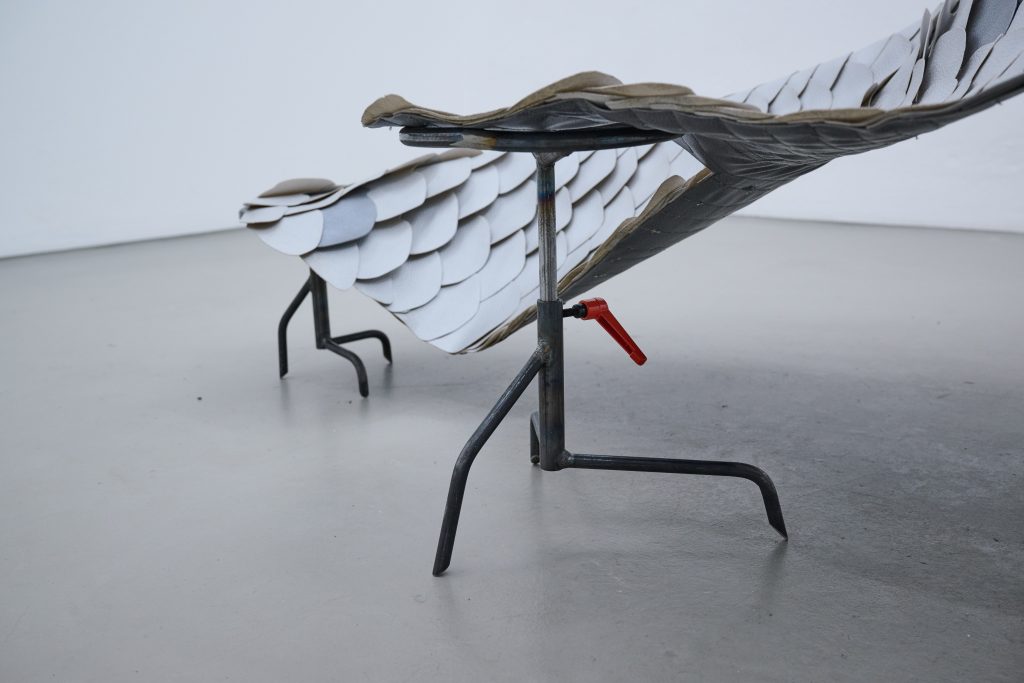
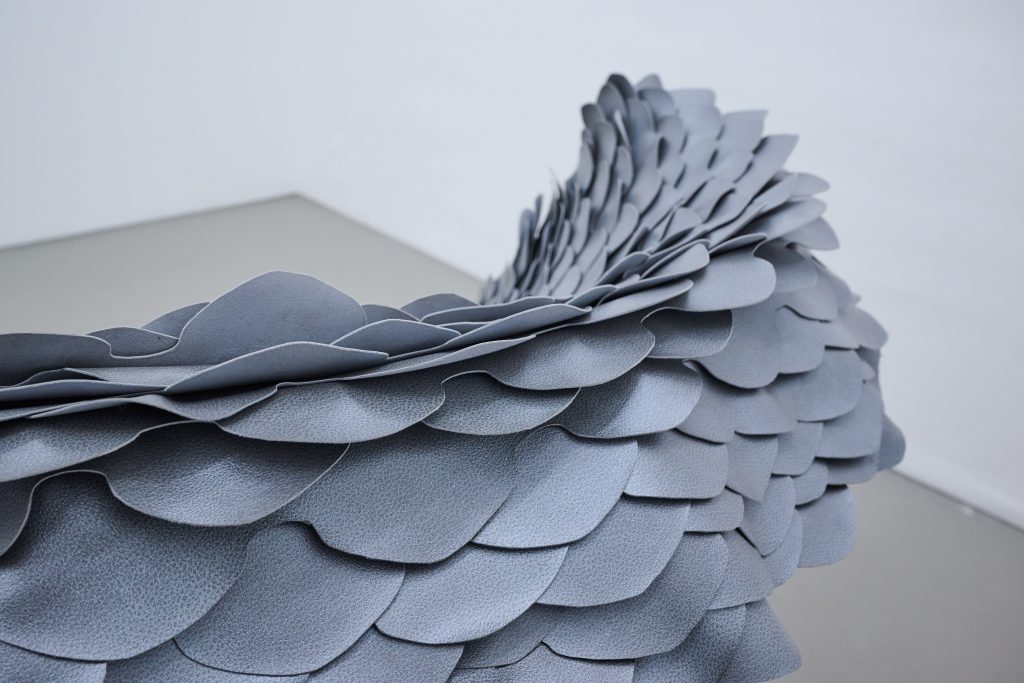
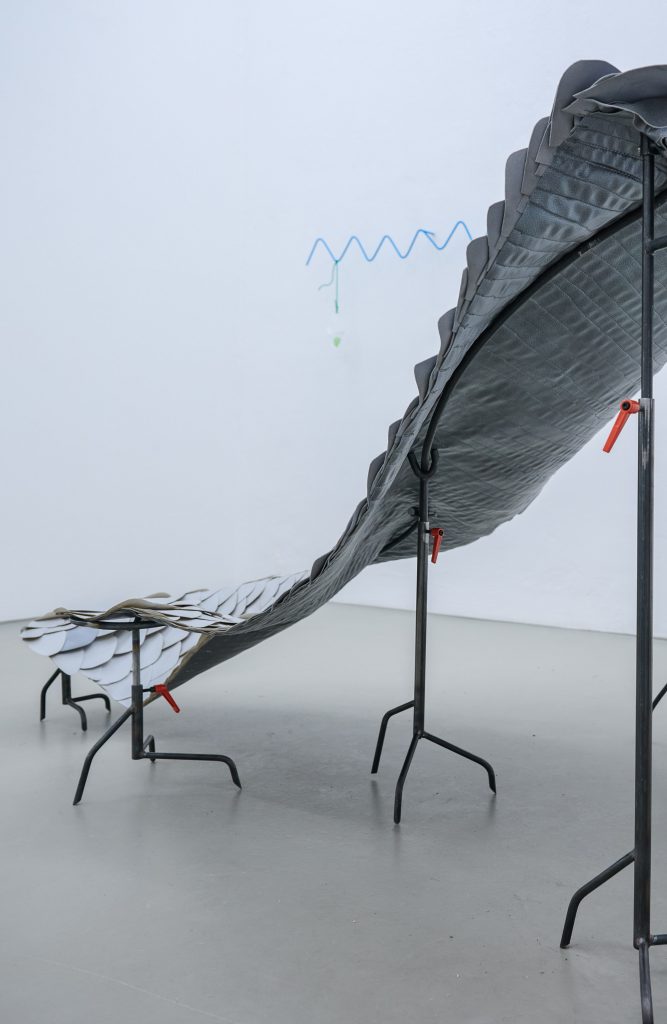
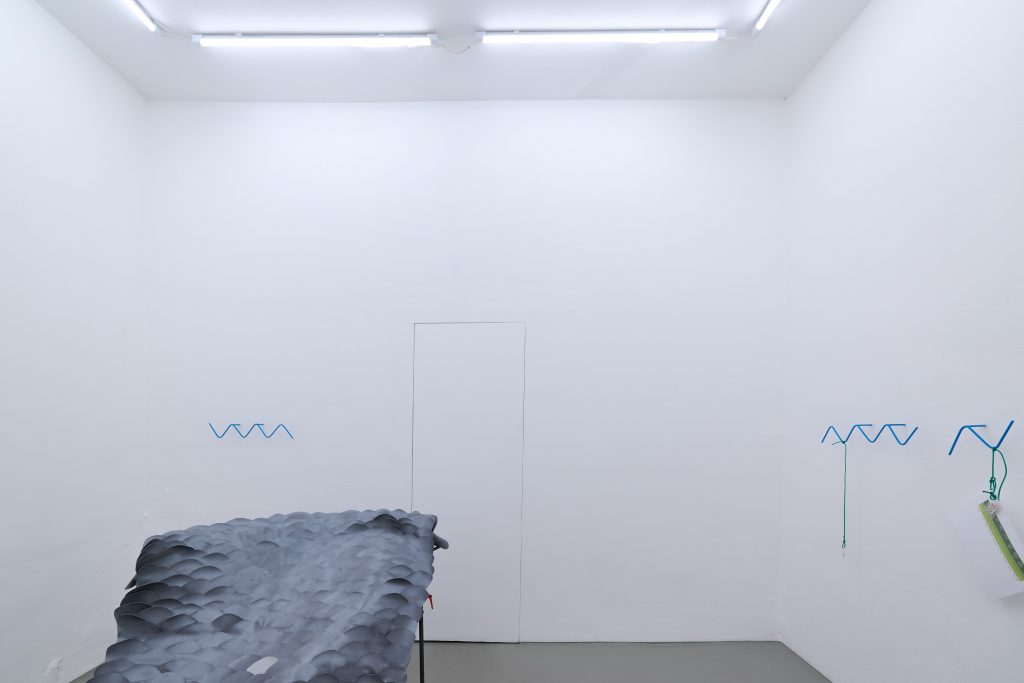
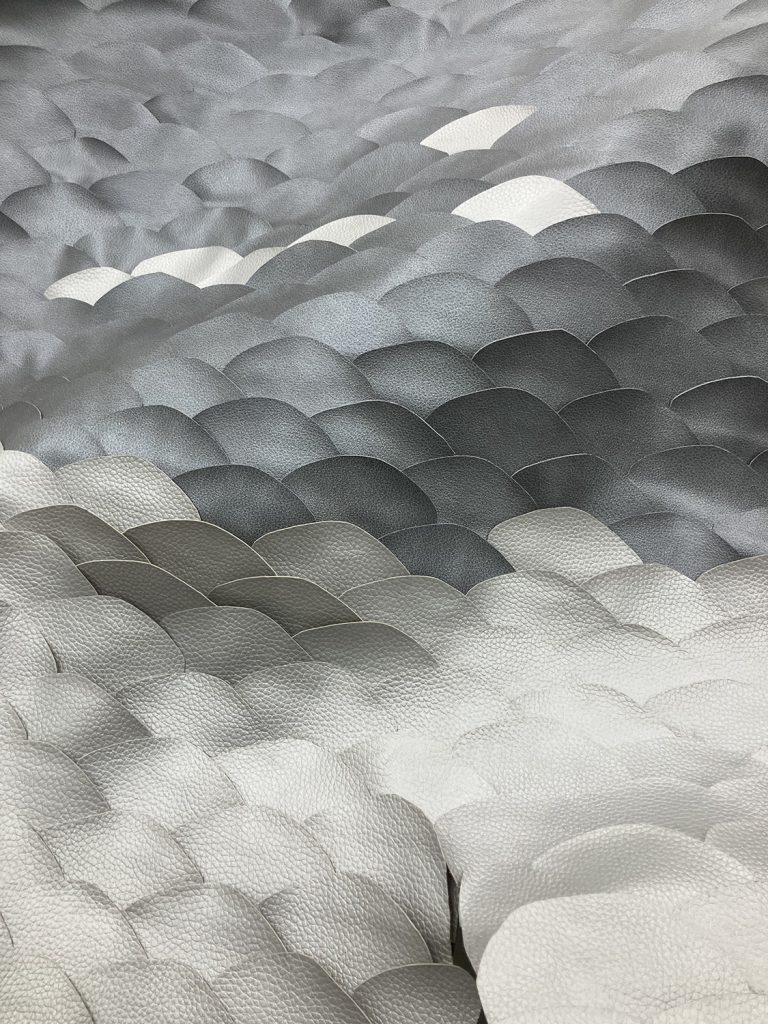
The exhibition “Getting close to waterline” brings together two artistic approaches that examine functions of different elements in relation to each other, by testing the moments in which their functions become uncertain. Through both artistic positions, function emerges as a relative state. What emerges is an environment in which support, balance, and spatial reference are continuously negotiated. Tobias Pilz’ approach starts with two fundamental architectural figures: the plinth element, that carries or supports and the roof, that protects. Both elements point away from themselves, refer outwards and thereby leave an empty interval between them. Their functions loop back on one another, questioning their function, rather than forming a linear system. In his most recent sculptures, these usually geometrical structures are shifted into organic, skeletal forms—soft, skin-like membrane, draped over a fragile framework. Function dissolves into an anatomy.
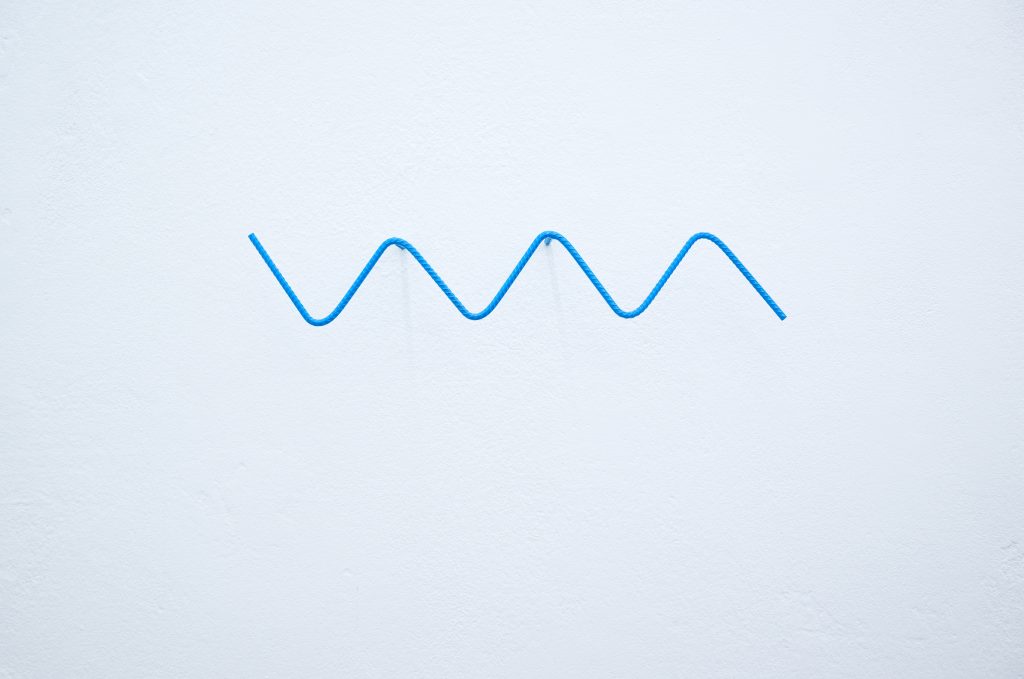
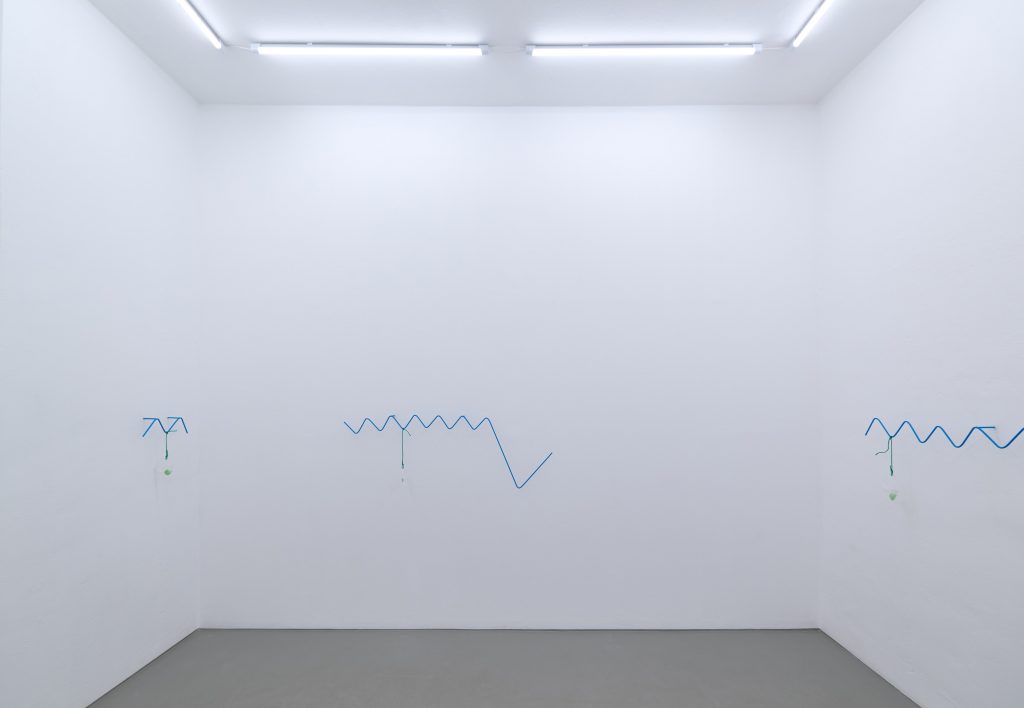
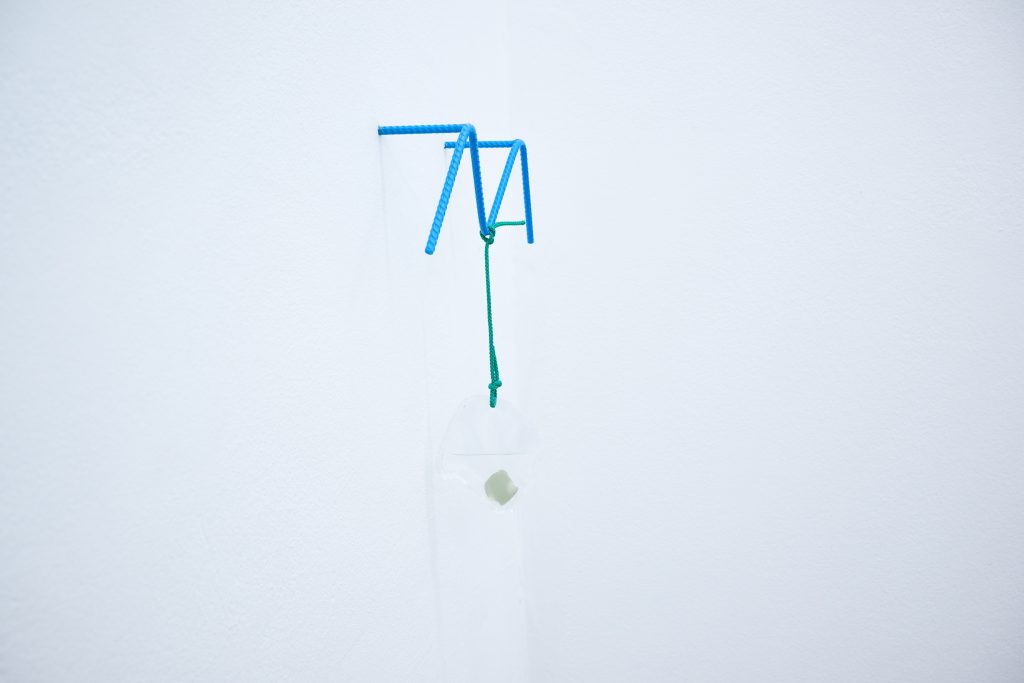
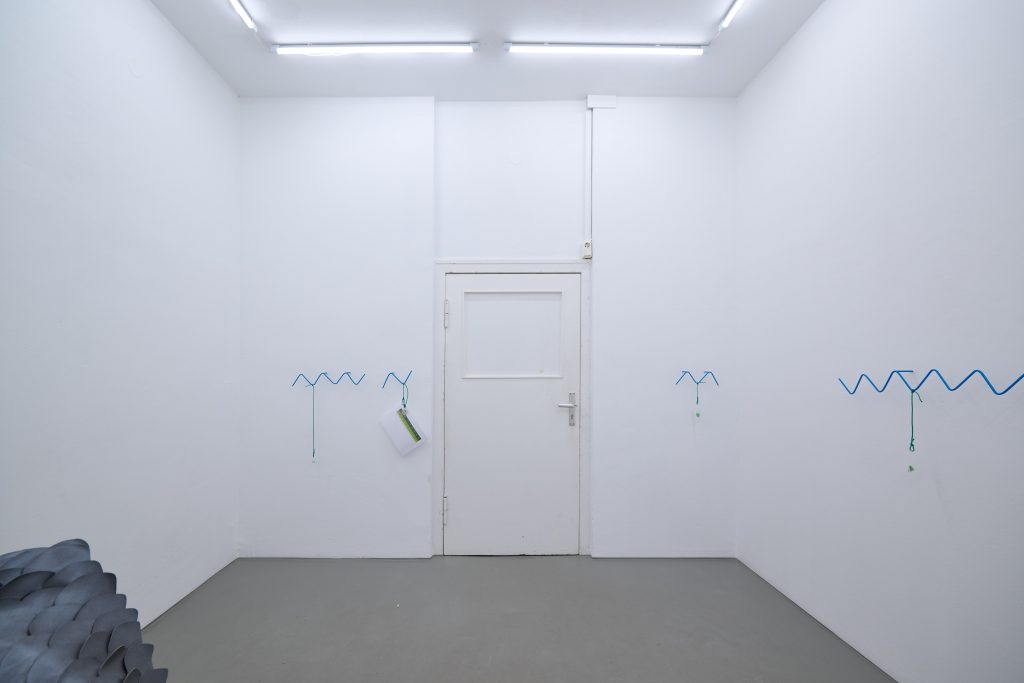
Thinking of architectural elements, Nicoleta Auersperg’s installation “Wasserwelle” appears as a railing that follows all four walls of the room. The ribbed surface structure of both, ropes and the steel railings suggest some kind of grip or adhesion, but its wave like shape and thin profiletake this handhold and turn it into something unreliable and unstable. In its pictorial gesture, the work evokes a drawn water level, allowing us to imagine a water surface that divides the volume of the space. In opposite to a railing, a water surface is something entirely intangible, something one cannot hold on to, yet it supports, and makes body or objects afloat.
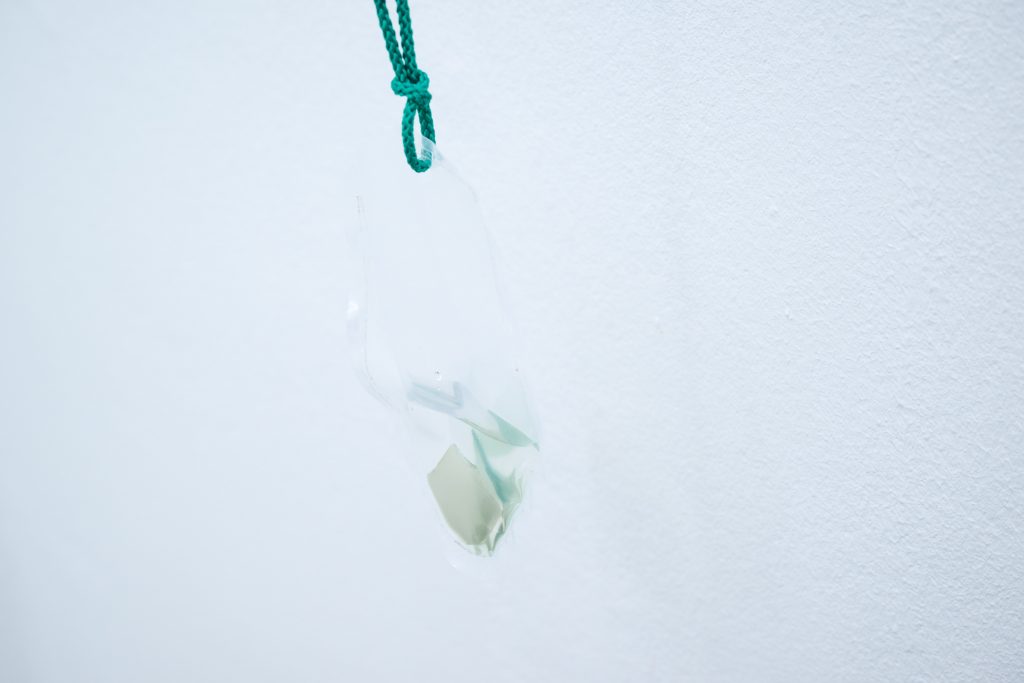
This principle extends into the water bags containing sea glass. Shaped by waves while floating in the sea over years, these found objects determine the form of the bags that now contain them. Visually, water enlarges them (by thirty percent) like a lens, letting them appear almost like a liquid bubble. The waterline inside the bags forms a straight horizon, reminding of the air bubble in a spirit level—a tool that shows the orientation of an object in relation to the Earth’s center. Here, however, orientation becomes unreliable—neither geographic nor local, but a measurement that slips out of certainty, mirroring the relativity of function and location.
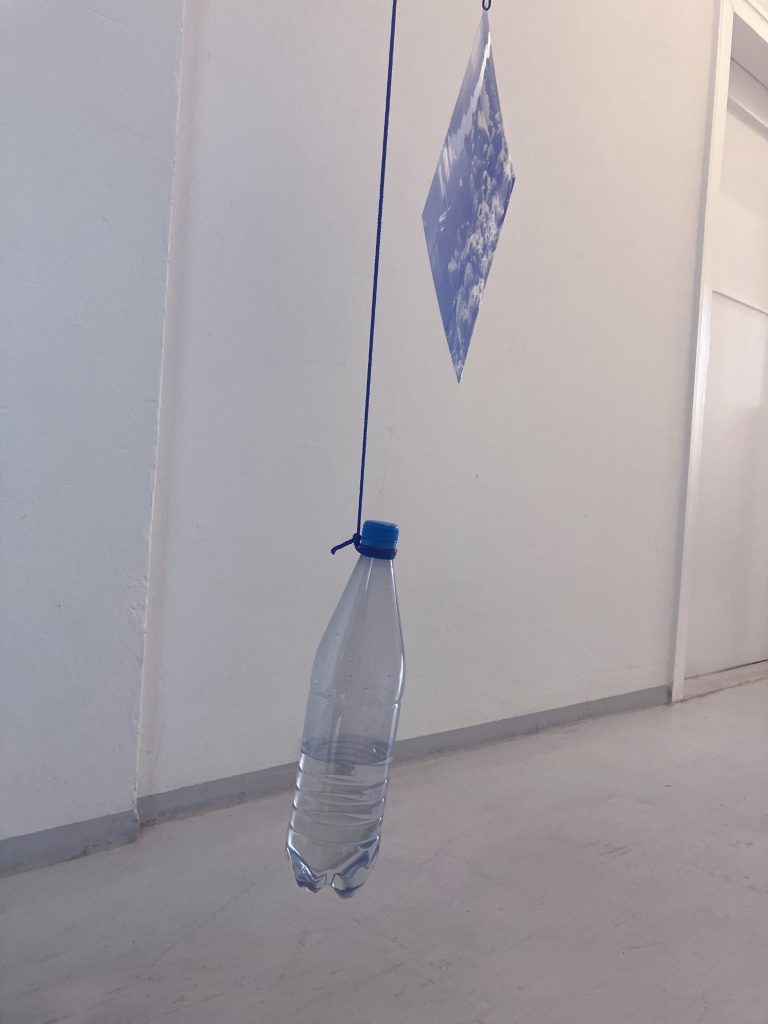
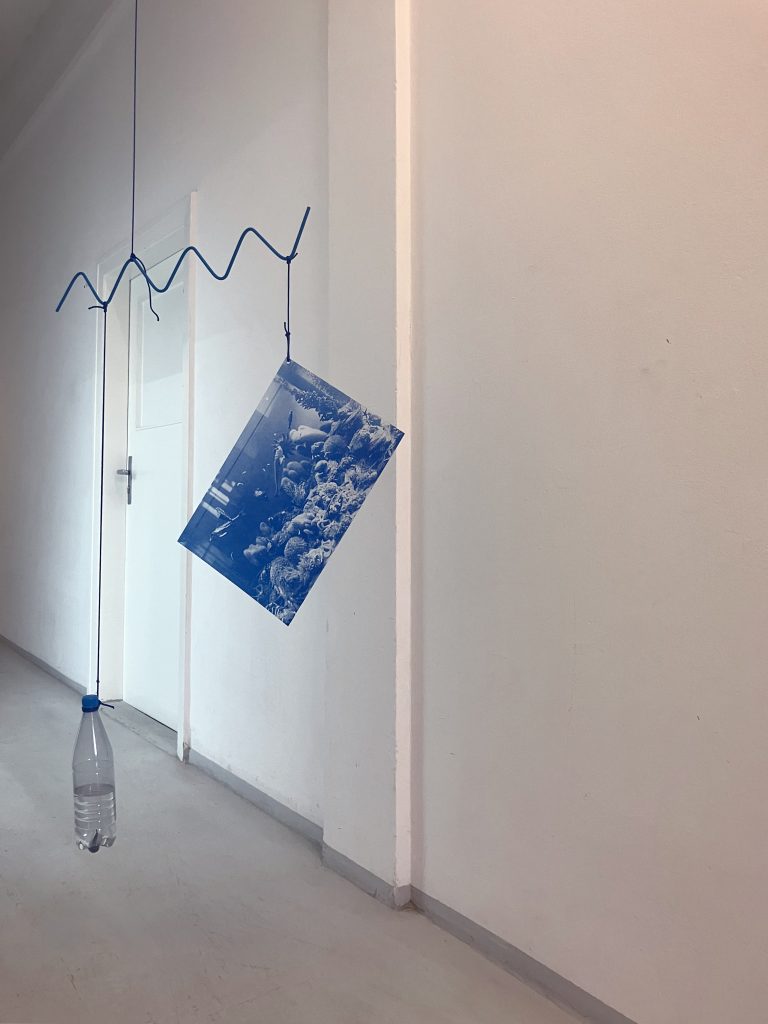
In her sculptures, Nicoleta Auersperg usually uses water bags as weights, as means to put objects in balance, but here they simply let afloat the carefully kept remnants. In the mobilé sculpture, a water container becomes such weight, balancing the “waterline” through gravity. In air, objects follow the principles of gravity, orienting themselves towards the Earth’s center. Architectural structures are developed to counteract this pull, to support, stabilise, and protect against potential impacts. In water, this gravitational logic no longer applies.
The screen print on foil reproduces an archival photograph titled “Deep-sea fauna”, documenting stuffed specimens of endangered or vanished fish arranged in an aquarium without water. Their bodies, once defined by buoyancy, now hang in an environment where nothing floats. The exhibition space itself operates like such a waterless aquarium: a container in which objects must be supported, hung, propped, or balanced. The works trace how we understand function, or which function an object or element must fulfil for us. This becomes a matter of perspective: a relativity of function, within the invisible natural forces that govern how objects behave.